

Published May 2025
Decoding Company Credit Reports: A Crucial Resource for Credit Insurers and Bankers
In a world where every financial decision carries risk, the ability to assess a company’s true creditworthiness has never been more critical. For bankers, insurers, and exporters alike, the company credit report is no longer just a formality—it’s a frontline defense against loss. This article reveals how to unlock the full power of a professionally structured credit report, transforming raw data into actionable insights and risk into opportunity.
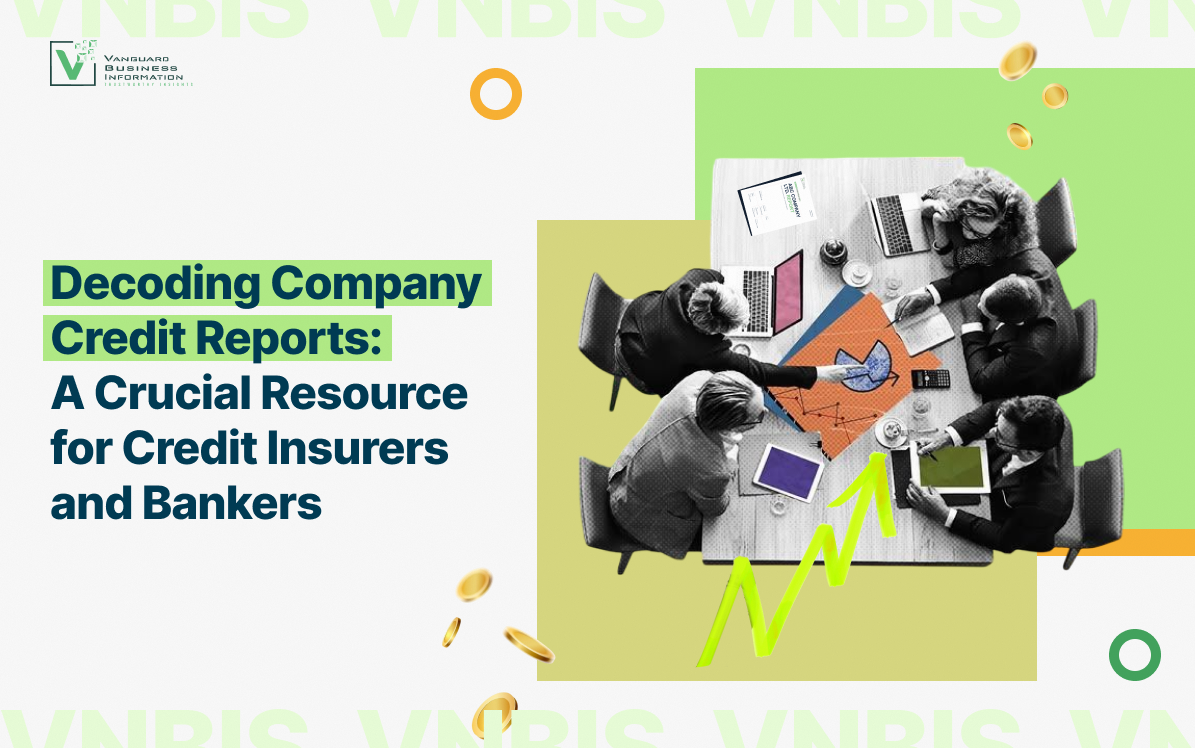
In today’s increasingly complex financial environment, lenders and credit insurers depend on one key document to assess business partners: the company credit report. This essential tool provides much more than merely a snapshot of a firm’s financial condition. It uncovers hidden risks by analyzing payment behavior, legal standing, ownership structure, and market dynamics.
For global credit insurers such as Alianz, Coface, Atradius, Sinosure, and commercial lenders operating across borders, especially in emerging markets, these reports are essential for credit underwriting, exposure monitoring, and portfolio risk control. The credibility of a company’s financial status and operational reality can no longer be judged solely by surface-level numbers. Professionals require verified insight—timely, contextual, and nuanced.
Why Company Credit Reports Matter
Company credit reports turn uncertainty into informed judgment. They provide a foundation for assessing default probability, verifying legal existence, detecting early risk signals, and benchmarking performance. These reports enable financial institutions to extend credit or underwrite risk based on evidence rather than assumption. Doing so, they help convert qualitative risk into a measurable, controllable variable.
The Anatomy of a Modern Company Credit Report
A high-quality credit report is structured across several key sections that, together, form a 360-degree risk profile.
The executive summary provides an at-a-glance view of a company's creditworthiness. It typically includes a recommended credit limit supported by internal scoring methodologies and sector benchmarks. A risk outlook is presented alongside a grade—ranging from low to high risk—highlighting any deteriorating trends or warning signals that require closer attention.
The identification and legal profile section verifies the company's official name, registration number, tax code, and corporate form. In jurisdictions where data transparency is inconsistent, verifying these core details is a vital first step. Emerging markets often see businesses operating under multiple identities or shell structures, and distinguishing between them is critical for any serious credit decision.
Understanding ownership is equally vital. A report usually outlines shareholders, equity distribution, and ultimate beneficial owners (UBOs). Whether the company is privately held, part of a conglomerate, or state-affiliated, this insight allows risk professionals to assess financial backing, governance strength, and potential political exposure. Hidden ownership structures may reveal concentration risks or indirect liabilities, and group-level guarantees can either enhance or undermine credit assessments.
Leadership transparency also plays a role in risk evaluation. The report typically profiles key executives and board members, providing information on tenure, experience, and legal standing. In markets where regulatory enforcement is still evolving, undisclosed directorships or politically exposed persons may signal future trouble. In contrast, a stable, well-documented management team is often a sign of operational maturity and sound governance.
Financials: The Foundation of Risk Evaluation
At the heart of every credit report lies its financial section. Here, firms like Vanguard Business Information LLC (VBI) stand out. VBI compiles multi-year audited or official financials, translated into English and converted to a reference currency such as USD. This section typically includes the balance sheet, income statement, and cash flow data, covering key indicators like net sales, EBITDA, operating income, and equity.
However, it’s not the raw numbers that matter most—it’s the interpretation. Credit professionals must ask: are revenues growing or declining? Are margins stable or under pressure? What do liquidity ratios reveal about cash flow management? Ratio analysis—covering profitability, solvency, efficiency, and leverage—is essential for understanding how the company generates returns, handles debt, and manages capital.
Firms like VBI go further by offering access to thousands of private company financials that are otherwise inaccessible through public filings. This proprietary data is especially valuable in emerging economies, where government disclosures are sparse or outdated. The ability to benchmark a firm against sector peers and analyze performance in a local context creates an edge for underwriters and lenders.
Behavioral Risk: Reading Beyond the Balance Sheet
A well-prepared credit report also explores how a company behaves in practice—not just on paper. Payment performance is often a leading indicator of risk. Reports typically include data on trade references, days past due, and any known defaults. Delays in supplier payments or cross-border disputes often surface before financial deterioration becomes visible.
Legal and compliance records are another essential layer. Bankruptcy filings, tax disputes, civil litigation, and regulatory actions may suggest reputational or financial risk. Even companies with strong balance sheets may be unbankable or uninsurable if entangled in unresolved legal issues. Identifying these factors early allows insurers and lenders to take a cautious stance or require enhanced due diligence.
Some reports include details about a company’s banking relationships, trade finance usage, and pledged assets. This information offers deeper insight into leverage, collateral usage, and reliance on short-term liquidity mechanisms such as factoring or letters of credit. Understanding whether a company’s assets are encumbered, and to what extent, directly affects its borrowing capacity and recovery potential in case of default.
Contextual Analysis: Sector and Country Risk
No business operates in isolation. Modern credit reports increasingly include macro-level commentary. Sectoral outlook, political stability, currency volatility, and regulatory trends can all impact a company’s risk profile—even if its internal figures appear strong. A company performing well in a declining sector may soon face pressure. One operating in a high-growth segment but in a politically unstable environment may face disrupted supply chains or policy shocks.
VBI integrates this broader context into its credit intelligence reports. Sector-specific benchmarks, regional growth forecasts, and local regulatory dynamics are mapped into the analysis. The result is a report that not only evaluates the company but also its operating environment—offering underwriters a more complete perspective.
From Data to Decision: How Credit Reports Are Used
Banks and credit insurers rely on these reports throughout the entire credit lifecycle. During onboarding, they help establish internal credit limits and identify approval tiers. During underwriting, they guide risk acceptance terms, such as coverage ceilings and pricing adjustments. During claims management, they provide evidence to support payout decisions or reject fraudulent filings. Throughout the monitoring phase, they enable early detection of default signals, prompting proactive exposure adjustments.
In cases where public data is incomplete or delayed, insurers turn to firms like Vanguard Business Information LLC to fill critical gaps. With a network of analysts, legal researchers, and field agents, VBI provides localized, up-to-date, and highly reliable company reports—especially for unlisted entities and SMEs in Vietnam and neighboring markets.
The Value of Timeliness and Local Intelligence
Credit reports lose value quickly if outdated. In dynamic sectors—manufacturing, construction, logistics—conditions can shift within weeks. VBI’s model emphasizes up-to-date intelligence, supported by in-country data collection and direct source verification. This is essential in avoiding reliance on stale information and ensuring that risk decisions are based on the latest available evidence.
Conclusion: Not Just a Document—A Risk Navigation Tool
Company credit reports are not static files to be filed away—they are decision-making tools. When interpreted carefully and supported by verified data, they provide financial institutions with a 360-degree view of a company’s condition. For banks, they guide prudent lending. For insurers, they support responsible coverage. And for corporations entering unfamiliar markets, they offer clarity, confidence, and control.
Firms like Vanguard Business Information LLC do not merely provide data in this environment. They help make business risk visible, measurable, and actionable—transforming uncertainty into informed strategy.
By Allie Le
Vanguard Business Information LLC