Published Oct 2025
IMF Asia Pacific Outlook 2025: Resilience Amid Trade Headwinds and Strategic Rebalancing
The IMF Asia Pacific Outlook 2025 underscores the region’s remarkable resilience as it contributes 60% of global growth, even amid escalating U.S. tariff headwinds. The IMF urges governments to rebalance policies and deepen regional integration to sustain momentum. Its warning on trade fragmentation has already sparked global debate, signaling a pivotal moment for Asia’s economic future.
A Region at the Crossroads of Global Economic Shifts
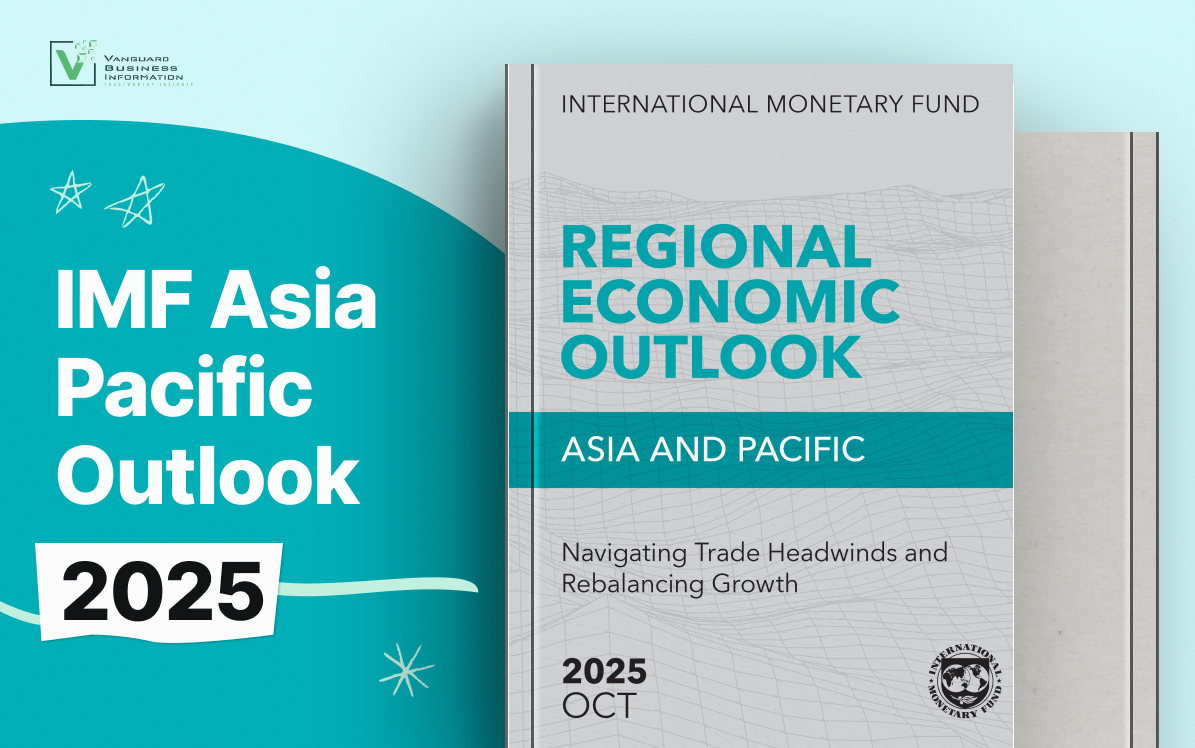
The IMF Regional Economic Outlook for Asia and the Pacific (October 2025) highlights the resilience and vulnerabilities of the world’s fastest-growing region. Despite escalating trade tensions and U.S. tariff hikes, the Asia-Pacific region continues to drive global growth, accounting for nearly 60% of global GDP expansion this year.
However, the IMF projects growth to moderate from 4.6% in 2024 to 4.5% in 2025, and further to 4.1% in 2026, as external shocks, slowing domestic demand, and structural constraints weigh on the economic outlook.
This report comes at a pivotal moment. It aligns with other influential publications — including the World Bank’s East Asia & Pacific Update, OECD Economic Outlook, and private-sector research from major investment banks pointing to a region navigating a new economic landscape shaped by shifting trade alliances and technological transformation.
Trade Tensions and Tariffs: A Persistent Headwind
One of the central themes of the IMF Asia Pacific Outlook 2025 is the impact of rising U.S. tariffs and protectionism. The tariff hikes announced in April 2025 have already reshaped trade flows and raised uncertainty for major exporters,including China, Vietnam, South Korea, and ASEAN countries.
Although some tariffs were later revised downward, trade policy uncertainty remains high. The IMF estimates that a one-standard-deviation increase in U.S. trade policy uncertainty could reduce investment in Asia by about 1%, with emerging economies hit twice as hard.
Exporters frontloaded shipments earlier in the year, cushioning first-half growth, but the IMF warns that this momentum will fade as tariffs bite. Intra-Asian trade is accelerating, supported by supply-chain realignments and the ongoing technology boom.
Domestic Demand: The Weak Link in Asia’s Recovery
While external trade has provided short-term support, domestic demand remains subdued across much of the region. Household consumption in many economies has yet to return to pre-pandemic levels due to weak service sectors, housing market corrections, and high household debt.
Retail sales remain soft in countries like Thailand, Indonesia, and China. Real estate slowdowns in New Zealand and parts of Southeast Asia are weighing on consumer sentiment.
The IMF underscores that limited fiscal space, inadequate social safety nets, and financial inefficiencies hinder a broader recovery. Inflation remains below target in many emerging economies, creating room for monetary easing — but short-term stimulus alone will not be enough without structural reforms.
Regional Trade Integration and the AI Investment Boom
Amid these headwinds, new growth opportunities are emerging. The IMF report points to a structural shift in value chains, with growing intra-regional trade and investment flows. As Chinese exports to the U.S. decline, intermediate goods are increasingly routed to ASEAN countries for further processing — signaling deeper regional integration.
The report also identifies the AI-driven investment cycle as a key source of upside momentum. Economies such as South Korea, Japan, Taiwan (POC), and Singapore benefit from global demand for advanced technology, semiconductors, and digital infrastructure.
Private-sector forecasts from major banks like HSBC and Morgan Stanley support this view, noting that AI-related capital spending is cushioning the regional slowdown and may lift productivity and growth from 2026 onward.
Policy Rebalancing: A Critical Test for Governments
To maintain resilience and secure sustainable growth, the IMF urges policymakers to rebalance their policy frameworks. Priority areas include:
- Targeted fiscal and monetary measures to cushion tariff shocks.
- Structural reforms to boost productivity and domestic demand.
- Improving financial intermediation to reduce capital misallocation.
- Deepening regional trade and financial integration to build long-term resilience.
These recommendations align with the World Bank’s call for regional supply chain deepening and the OECD’s emphasis on targeted fiscal discipline.
Global Reactions and Market Sentiment
The IMF Asia Pacific Outlook 2025 has generated widespread discussion among economists, investors, and governments.
- Goldman Sachs analysts noted that Asia’s outperformance compared to April forecasts reflects “policy agility and export diversification.”
- The Asian Development Bank (ADB) emphasized the need to maintain financial stability amid easing conditions and manage currency volatility.
- Several ASEAN finance ministries welcomed the IMF’s endorsement of deeper integration, aligning with RCEP and CPTPP strategies.
Financial markets have responded positively in the short term. Equity markets have rebounded, and capital inflows have resumed because of a weaker U.S. dollar. However, yields and investor confidence remain sensitive to geopolitical risks and trade developments.
A Controversial Warning: Trade Fragmentation and Long-Term Growth
Perhaps the most controversial and widely discussed element of this year’s IMF report is its explicit warning about the long-term risks of sustained tariff escalation. The IMF cautions that persistent U.S. tariffs and global trade fragmentation could erode Asia’s productivity growth, disrupt investment, and reverse decades of trade integration gains.
This position has divided experts. Some economists argue that Asia’s resilient supply chains and growing regional alliances can absorb the shock. Others agree with the IMF, warning that structural fragmentation could permanently reduce Asia’s global market share if governments don’t respond with coordinated regional strategies.
A Forward-Looking Outlook for Asia-Pacific
Asia’s near-term economic resilience is evident. However, as the IMF and other global institutions underline, long-term prosperity will depend on bold structural reforms and stronger regional cooperation. How Asia responds to tariff pressures, shifting international alliances, and technological disruption will define its economic trajectory in the next decade.
As Krishna Srinivasan, Director of the IMF’s Asia and Pacific Department, remarked, this is a “critical moment to secure sustainable and inclusive growth.” Strategic policy decisions in 2025 could determine whether Asia remains the anchor of global growth or faces a more fragmented and uncertain future.