Published Feb 2026
To Lam’s Washington Trip: Trade Tensions, $37 Billion in Deals and a Strategic Crossroads
As To Lam arrives in Washington, trade tensions shadow a landmark $37 billion wave of agreements spanning aviation, technology, and digital infrastructure. From Boeing deals to the Starlink license and tariff negotiations, the visit signals both opportunity and strategic risk as Vietnam navigates an increasingly complex U.S.-China power rivalry.
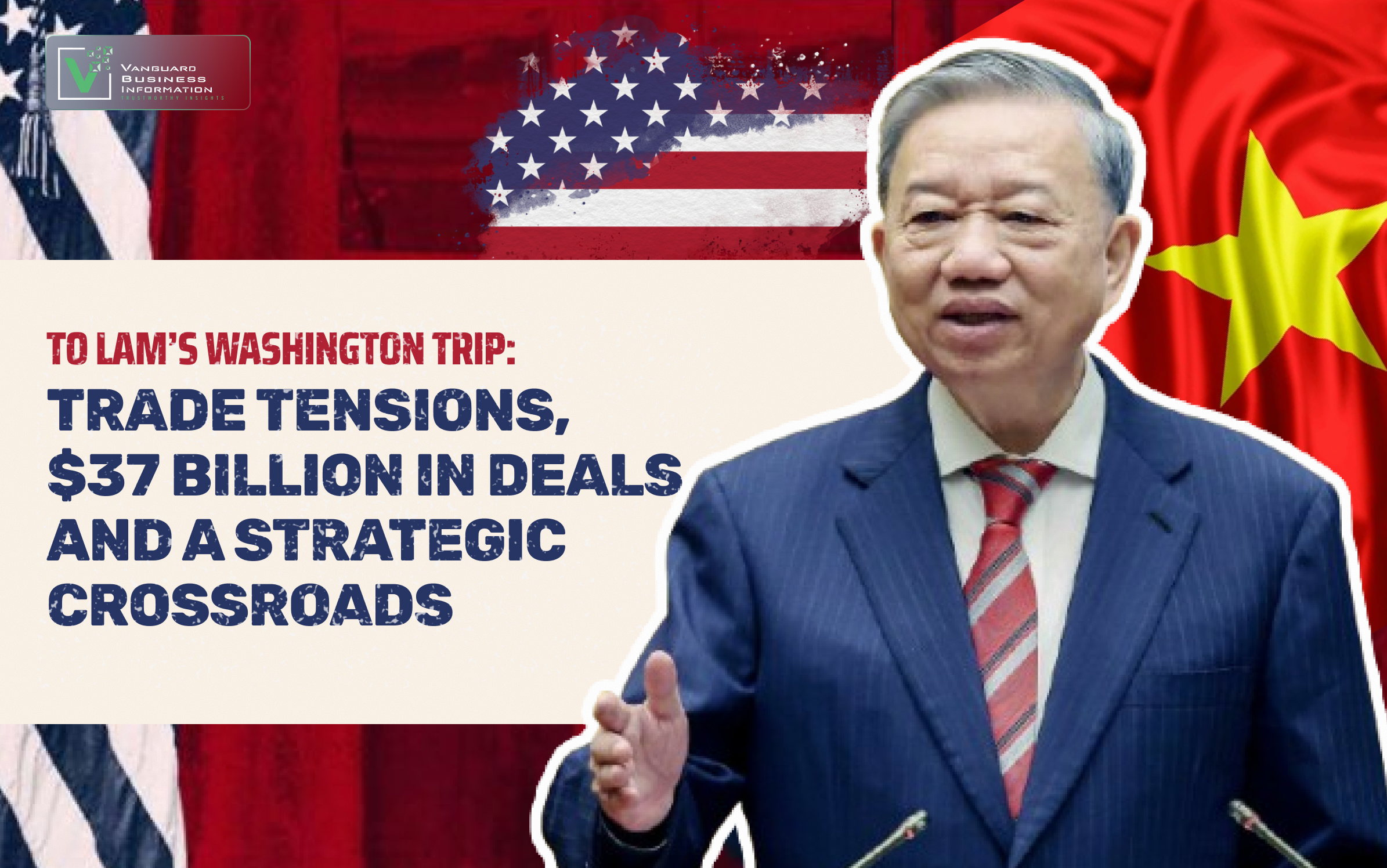
The Washington trip of Vietnamese Communist Party General Secretary To Lam (February 18–20, 2026) has become a focal point for international media and geopolitical analysts, coinciding with a critical moment in U.S.–Vietnam economic and strategic relations. As Hanoi seeks closer cooperation with Washington on trade and national interests, the visit also underscores complex tensions between economic opportunity and geopolitical pressure amid U.S.–China competition.
The visit occurred against the backdrop of expanding U.S.–Vietnam partnerships, juxtaposed with contentious U.S.–Vietnam tariffs on Vietnamese exports, concerns over supply chain practices, and Vietnam’s emerging role in U.S. policy initiatives such as the Board of Peace, a Trump-era foreign policy platform linking diplomatic, economic, and security priorities in the broader Middle East context.
Political Context: A High-Level Engagement
General Secretary To Lam’s Washington trip marked one of the first major overseas engagements following Vietnam’s 14th Party Congress in early 2026. This was not merely a ceremonial visit. Vietnam dispatched a high-level delegation that included senior ministers and economic officials, signaling Hanoi’s determination to address substantive issues spanning trade policy, industrial cooperation, technology access, and strategic diplomacy directly with U.S. policymakers.
Notably, Vietnam’s participation in the Board of Peace, convened under former U.S. President Donald Trump and focused on supporting peace and reconstruction in volatile regions like Gaza, places Hanoi in a sensitive diplomatic position. While not a traditional forum for Southeast Asian partners, Vietnam’s inclusion may be interpreted as both recognition of its evolving role in global affairs and a diplomatic opportunity to cultivate strategic access to Washington’s inner-circle policy network. However, the initiative has also drawn criticism and skepticism due to its perceived selective membership and political motivations.
Reuters and global outlets have framed Vietnam’s presence not as random but as part of Washington’s bid to construct broader diplomatic alignments outside existing regional institutions.
U.S.–Vietnam Tariffs: A Core Economic Challenge
Central to the visit were discussions over U.S.–Vietnam tariffs and trade compliance issues that directly affect Vietnamese exporters. Over the past few years, bilateral trade has expanded rapidly, with U.S. imports from Vietnam reaching record highs. In parallel, Vietnam’s imports from China have also surged, raising concerns in Washington about circumvention and transshipment—the routing of Chinese-origin goods through Vietnam to avoid U.S. tariffs.
Reuters reported that the U.S. had imposed tariffs of approximately 20% on certain Vietnamese goods and up to 40% on goods suspected of originating from China and transshipped through Vietnam. These measures have put pressure on Vietnamese producers, especially in sectors such as textiles, footwear, and electronics assembly, where significant Chinese inputs are common.
Vietnam’s trade surplus with the United States has grown accordingly—exacerbating political scrutiny in Washington over America’s wider trade deficit and fueling calls for stricter origin verification and enforcement. Reducing this imbalance without triggering punitive tariffs remains one of Hanoi’s most pressing policy priorities.
Boeing Deals: Economic Signaling and Strategic Messaging
One of the most prominent outcomes coinciding with the trip was a flurry of Boeing deals signed by Vietnamese airlines. In Washington, Vietnam Airlines finalized an agreement to purchase 50 Boeing 737 MAX aircraft—a deal reportedly worth around $8.1 billion, with deliveries planned from 2030 to 2032. Simultaneously, Sun PhuQuoc Airways agreed to acquire 40 Boeing 787-9 Dreamliners under a contract valued at approximately $22.5 billion, while financial arrangements for Vietjet aircraft acquisitions were also reported.
These transactions serve multiple strategic functions:
- They generate positive economic headlines in both Vietnam and the United States.
- They signal Vietnam’s willingness to invest in U.S. manufacturing and aviation technology.
- They offer political cover for U.S. policymakers seeking tangible economic outcomes from expanded bilateral engagement.
While aviation contracts do not translate into immediate shifts in trade balance or tariff policy, they are powerful diplomatic tools that reinforce the narrative that Vietnam is a serious investor in U.S. industrial capacity.
Starlink License: A Step Toward Technological Opening
In the days leading up to To Lam’s visit, Vietnam approved satellite internet provider Starlink, a subsidiary of SpaceX, to operate in the country, including for rural and maritime connectivity. This decision drew attention because telecommunications licensing is traditionally tightly controlled in Vietnam.
Starlink’s approval is significant for several reasons:
- It improves connectivity in underserved regions and enhances national broadband resilience.
- It signals the Vietnamese authorities' willingness to accommodate U.S.-based technology platforms.
- It contributes to a narrative of limited opening within a controlled regulatory environment.
Industry analysts noted that while Starlink’s presence does not imply wholesale liberalization of Vietnam’s digital economy, it suggests incremental policy shifts that could pave the way for future technological partnerships.
The “Board of Peace” and How to Be Strategically Balanced
Vietnam’s inclusion in the Board of Peace initiative reflects Hanoi’s nuanced diplomatic posture. While not a traditional Western ally, Vietnam has consistently pursued diversified partnerships across global capitals. This visit and participation in policy platforms often shaped by U.S. political currents illustrate Hanoi’s pragmatic approach—seeking economic and strategic benefits without fully aligning with any single power bloc.
Yet, this strategy has inherent limits. Vietnam’s geographic and economic proximity to China, its role in regional supply chains, and enduring trade asymmetries complicate its ability to present fully independent policy positions. Analysts have described Vietnam as walking a “strategic tightrope,” balancing closer economic ties with the United States against the geopolitical realities of China’s regional influence.
Structural Trade Issues and the “Market Economy” Question
Vietnam has long sought recognition as a market economy in international trade law—a designation that could reduce antidumping and countervailing duties imposed by trading partners like the United States. However, U.S. trade authorities have continued to classify Vietnam as a non-market economy (NME) for certain trade remedy purposes, complicating tariff disputes and compliance strategies.
This trade status tension underscores broader structural challenges that Hanoi must address if it seeks deeper integration into global markets on terms that reduce vulnerability to trade enforcement actions.
Opportunities and Challenges Ahead
Opportunities:
- Expanded aircraft procurement reinforces commercial ties and supports aviation growth.
- Starlink’s entry opens avenues in digital infrastructure.
- High-level engagement builds political capital and diplomatic visibility.
- Incremental participation in U.S.-led initiatives enhances strategic portfolios.
Challenges:
- Persistent trade imbalances and tariff pressures demand complex compliance solutions.
- Supply chain transparency and rules-of-origin enforcement will shape future market access.
- Strategic alignment with U.S. initiatives must be balanced with relations with China.
- Structural economic reforms are required to address longstanding trade remedy classifications.
Vietnam today finds itself in a strategically ambiguous position—poised between economic aspiration and geopolitical constraint. The To Lam Washington trip underscores both the promise and the peril of deepening ties with the United States in an era of shifting alliances and competitive great power politics.
Sources:
https://www.census.gov/foreign-trade/balance/c5520.html
https://boeing.mediaroom.com/2026-02-18-Vietnam-Airlines-Finalizes-Order-for-50-Boeing-737-MAX-Airplanes
https://vietnamnews.vn/economy/1753208/viet-nam-runs-trade-surplus-of-over-20-billion-in-2025.html