Published Feb 2026
From Closed Doors to Open Data: Vietnam’s Journey Toward a Transparent and Dynamic Economy
Forty years ago, Vietnam was a tightly controlled, centrally planned economy with limited private enterprise and minimal transparency. Today, it is one of Asia’s most dynamic and globally integrated markets, powered by reform, digital transformation, and an increasingly open governance framework. The accelerated 2026 Economic Census is more than a statistical update; it is a powerful symbol of Vietnam’s evolution from a closed system to a confident, data-driven economy ready for its next phase of growth.
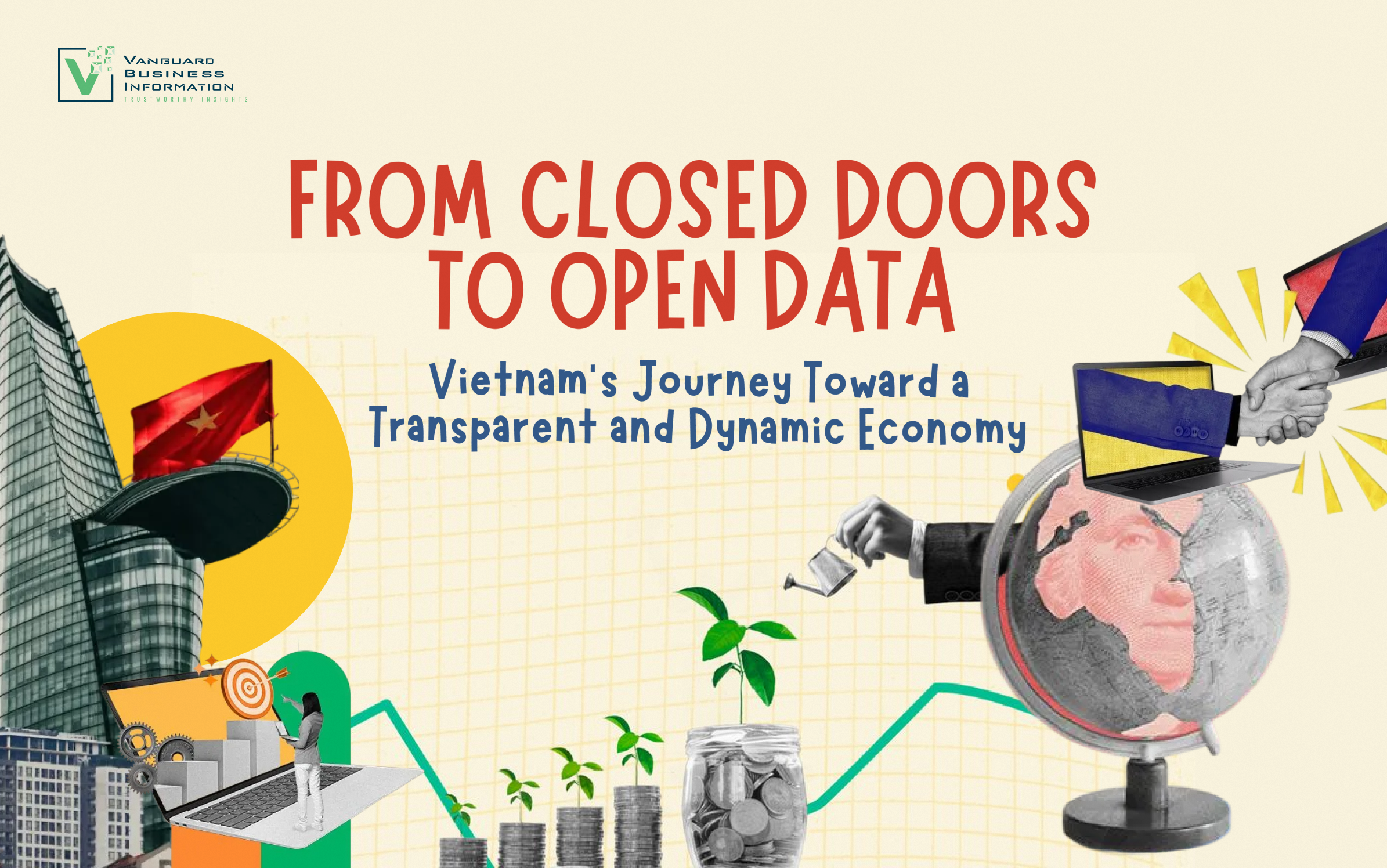
Forty years ago, Vietnam was among the most closed economies worldwide. Central planning controlled production, private enterprise was limited, foreign trade was heavily regulated, and statistical information was neither timely nor easily accessible. Today, Vietnam stands as one of Asia’s most dynamic and outward-looking economies, deeply integrated into global supply chains, driven by market forces, and increasingly dedicated to transparency and digital governance.
The transformation did not occur overnight. It started with a decisive political and economic shift called Đổi Mới in 1986, a renovation policy that shifted Vietnam from a rigid centrally planned system to a “socialist-oriented market economy.” What followed over the next four decades was not just economic growth but also a structural opening of institutions, markets, and information.
The 2026 Economic Census, now in progress, symbolizes how much Vietnam has advanced.
From Central Planning to Market Discipline
In the late 1980s, Vietnam faced severe economic hardship: hyperinflation, food shortages, and limited productivity. The adoption of Đổi Mới marked a strategic pivot. Private businesses were legalized. Foreign investment was welcomed. Price controls were gradually relaxed. Export-oriented industrialization began to replace state-commanded production.
Over time, Vietnam joined ASEAN, signed multiple free trade agreements, entered the World Trade Organization, and became a manufacturing hub for electronics, textiles, and machinery.
These reforms did not just open borders, but they also compelled greater transparency in economic governance. Market mechanisms need clearer rules, reliable data, and predictable policy frameworks. Investors want information. Trade partners require transparency. Credit markets rely on accountability.
Transparency became not only a governance principle but an economic necessity.
The 2026 Economic Census: Accelerating Openness
On February 23, Minister of Finance Nguyen Van Thang, head of the Central Steering Committee for the 2026 Economic Census, announced that preliminary census results will be released on June 30, 2026, seven months earlier than originally planned.
This acceleration is not merely administrative. It signals urgency, coordination, and confidence.
The revised timeline compresses information collection, data consolidation, and reporting while emphasizing that speed must not compromise credibility. Responsibilities have been reassigned across ministries and localities to ensure nationwide coordination.
Earlier publication of comprehensive economic data reflects a maturing economy. It shows that Vietnam recognizes timely and credible statistics as a cornerstone of policy credibility and investor confidence.
Expanding the Definition of the Economy
The 2026 census introduces notable structural upgrades. It expands coverage to include cooperative groups and online household businesses, segments previously outside formal statistical reach.
This is significant.
Vietnam’s economy today is not limited to state enterprises and large corporations. It includes digital entrepreneurs, e-commerce sellers, cooperative farming networks, service innovators, and millions of small household businesses operating across physical and online platforms.
By incorporating these segments into official measurement frameworks, Vietnam is acknowledging the true breadth of its economic activity. Transparency is no longer confined to traditional corporate sectors, it is being extended to the grassroots digital economy.
This expansion reflects an economy that understands its own transformation.
Digital Tools, Artificial Intelligence and Data Connectivity
Unlike earlier census rounds, the 2026 Economic Census incorporates modern technology at every stage. Artificial intelligence will help in industry classification. Digital mapping tools will track real-time progress. Administrative databases, including business registration, taxation, and customs, will be linked to census systems.
This level of integration reduces fragmentation and strengthens data consistency. It also moves Vietnam closer to a unified national socio-economic database aligned with newly adjusted provincial and commune-level administrative boundaries.
In short, Vietnam is not just collecting data: it is building digital infrastructure for governance.
For international investors, this sends an important signal. Transparency today involves more than political openness; it includes digital capability, inter-agency coordination, and real-time data validation.
Challenges Along the Way
Openness does not eliminate friction.
As of early February, the first phase of data collection had reached over half of its targets nationwide, but progress has been uneven. Authorities acknowledge that some business owners remain hesitant to fully disclose financial information.
This hesitation reflects historical habits formed in earlier eras when transparency was neither incentivized nor trusted. Building a culture of disclosure takes time.
Yet the government’s commitment to strengthen supervision, inspection, and quality control demonstrates a clear direction: faster data release must go hand in hand with credibility.
Transparency is not declared, it is built through enforcement and trust.
Vietnam Today: An Energetic and Integrated Economy
Vietnam’s economy today is profoundly different from its closed past. It is one of the most trade-dependent economies in Asia. It attracts substantial foreign direct investment. It participates in global value chains in electronics, manufacturing, and renewable energy. It negotiates advanced trade agreements with major economies.
Growth has been driven not only by policy liberalization but also by institutional modernization. Tax systems have been digitized. Customs procedures have been streamlined. Public finance reporting has improved. Corporate governance standards have gradually aligned with international practices.
The acceleration of the 2026 Economic Census symbolizes this broader evolution. It reflects a government that understands the strategic importance of reliable data in a competitive global environment.
Transparency today is no longer optional for Vietnam. It is central to sustaining growth.
A New Development Phase
The census results will serve as the foundation for a comprehensive socio-economic database to support governance in Vietnam’s next development phase.
As administrative boundaries are adjusted and digital transformation deepens, policymakers require accurate, timely, and granular data. Investors require clarity. Financial institutions require measurable indicators.
Vietnam’s economic openness has evolved from trade liberalization in the 1990s to institutional transparency in the 2020s. The country is moving from simply opening its doors to actively organizing and digitizing the information within them.
Conclusion: From Closed Society to Open System
Vietnam’s journey over the past 30–40 years is one of structural transformation. From a closed, centrally planned society to a vibrant, market-oriented economy, the country has steadily expanded its engagement with global markets and strengthened its internal governance mechanisms.
The 2026 Economic Census, with its accelerated timeline, digital integration, expanded coverage, and commitment to data quality, represents more than a statistical exercise. It represents confidence, confidence in institutions, in technology, and in Vietnam’s role in the global economy.
Transparency in Vietnam today is not perfect, but it is progressing. And the direction is clear: toward openness, digitalization, and accountable growth.
For businesses and investors seeking deeper corporate intelligence, financial analysis, and risk assessment across Vietnam and other Asian markets, Vanguard Business Information LLC provides comprehensive business information services through www.vnbis.com, supporting informed and strategic decision-making in a rapidly evolving regional economy.