5th Floor, UDIC COMPLEX Building, Hoang Dao Thuy Street, Trung Hoa Ward, Cau Giay District, Ha Noi City, Vietnam
84-24 / 2221 4025 / 2221 4026
2020, 2021, 2022, 2023, 2024
ECOBA VIETNAM JOINT STOCK COMPANY (CÔNG TY CỔ PHẦN ECOBA VIỆT NAM)
One of Vietnam’s rising private construction contractors is navigating a maturing industry and tightening market conditions.
ECOBA VIETNAM JOINT STOCK COMPANY, Business ID 0104415496, is a Hanoi-based construction enterprise founded in 2010 and headquartered at the UDIC Complex, Trung Hoà Ward, Cầu Giấy District. Over more than 15 years, ECOBA has developed into a mid-sized contractor active in residential and civil engineering, along with architectural consultancy, site preparation, environmental construction, and various technical support services.
Led by General Director Vũ Tiến Đạt, the company employs approximately 500 staff, reflecting a sizable operational footprint for a privately held construction firm in Vietnam’s capital.
A Company Stable in Scale — but Facing a Plateau
ECOBA manages an asset base of USD 119.1 million and equity of USD 50.97 million, figures that have remained remarkably stable over the past three fiscal years. Revenue in 2024 reached USD 91.92 million, essentially flat compared to the previous year. While this consistency indicates reliable project flow, it also suggests that ECOBA is operating within a narrow growth band in a construction market that has become crowded, capital-intensive, and increasingly dependent on investor confidence.
Profit for 2024 stood at USD 353,110, a modest number for a company of ECOBA’s scale. Interestingly, although profit rose by 22.8% compared to the prior year, the absolute margin remains thin. For observers, this raises important questions: Is ECOBA prioritizing project volume over profitability? Or does its project mix involve thin-margin contracts designed to maintain market presence while waiting for more favorable opportunities?
Strengthening Liquidity Amid Market Headwinds
One of ECOBA’s notable financial features is its working capital of USD 41.75 million, a healthy buffer that gives the company operational flexibility amid tighter credit markets. For a contractor, this strength is significant, as delays in investor payments, slow project approvals, and rising input costs have been common pain points for the sector.
Still, the steady decline in total assets over the last three fiscal years — from USD 125.15 million in 2022 to USD 119.1 million in 2024 — warrants a closer look. Is this part of a deliberate restructuring strategy, or a reflection of reduced project inventory in a cooling real-estate market?
Shareholding Structure: A Quiet but Meaningful Detail
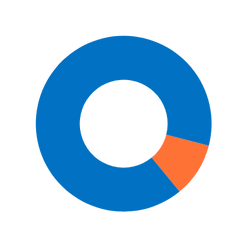
ECOBA’s ownership is predominantly domestic, with 71% held by other shareholders, while 29% belongs to Haseko Corporation, a well-known Japanese construction group. This minority stake introduces an intriguing dynamic: What level of influence or technical cooperation does Haseko bring to ECOBA? And how does a Vietnamese private contractor balance local decision-making with international investor expectations?
This partnership suggests the possibility of technology transfer, improved governance practices, and access to cross-border expertise—elements that could help ECOBA differentiate itself in an increasingly competitive landscape.
A Diversified Activity Portfolio
Beyond traditional construction works, ECOBA is licensed for a surprisingly broad spectrum of activities—from environmental treatment and wastewater management, to short-term accommodation, property trading, and even research and experimental development in natural sciences.
Such a wide range of activities implies strategic optionality. Still, it also raises the question: how many of these lines are actively pursued, and how many serve as future positioning for diversification?
Looking Ahead: A Company Worth Watching
ECOBA may not be in its high-growth era, but it stands at an interesting crossroads. With stable revenue, controlled equity movements, a substantial liquidity buffer, and the involvement of a major Japanese shareholder, the company seems quietly preparing for a strategic shift — whether in project scale, business model, or geographic expansion.
Yet its slim profitability and slowly shrinking asset base signal that deeper analysis is needed to understand the company’s long-term resilience.
For investors, partners, or project developers, an updated, in-depth report from VNBIS would offer clearer insight into ECOBA’s contract portfolio, project pipeline, risk exposures, and future competitiveness in Vietnam’s evolving construction sector.
Legal Profile
ECOBA VIETNAM JOINT STOCK COMPANY
CÔNG TY CỔ PHẦN ECOBA VIỆT NAM
ECOBA.,JSC
0104415496
04 Feb 2010
Ha Noi City Department of Planning and Investment
Privately held
Active
Unlock
Bulk data files, or bulk reports, per sector, location, or even revenue based
Legal Profile
Contact and Location
Legal Representative
Shareholders
Business Operation
Assets
Owner's Equity
Sales
Profit
Company Standard Report
Legal Profile
Business Locations
Legal Representative
EBT
EBITDA
Working Capital
Tangible Net Worth
Financial Ratios
Balance Sheet
Profit and Loss Statement
Cash Flow Statement
Comprehensive Report
Report Summary
Legal Profile
Historical Information
Business Locations
Subsidiary and Affiliated Company
Management and Directors
Shareholders
Business Operation
Suppliers
Buyers
Credit Limit
Industry Information
Key Industry Players
Competitors
Negative Payment Records
Banking Information
Litigation Records; Negative News
Financial Ratios
Balance Sheet
Profit and Loss Statement
Cash Flow Statement
Opinion from Analysts
GET IN TOUCH FOR EXCLUSIVE DEALS!
Reach out to us here for a customized service package or sign up for a better price
We respect your privacy while serving the community. Misusing information for unsolicited contact is strictly prohibited.
To hide this information, please follow the steps below and complete CAPTCHA verification.
Your name *
Email *
Reason for hiding information *
We use cookies to learn about your activities on our website to improve the quality of our services.
We take your privacy very seriously. Please see our Privacy Policy for details and any questions.
Notification
The website is currently being updated. Please check back later. Thank you for your patience!