Published Mar 2026
Vietnam Automobile Parts Importers: Key Players Behind a Fast-Growing Auto Market
In a market of 100 million people where car ownership is a fraction of its regional peers', every automaker in Asia has Vietnam circled on its map, and the race to dominate it is already underway. A Vietnamese EV startup is outselling Toyota. A domestic conglomerate is about to launch its own car brand. And a wave of Chinese manufacturers is arriving with vehicles priced to make every established player sweat. January 2026's automobile parts import data, USD 671.6 million in a single month, up 79.9% year-on-year, is not a statistic; it is a shockwave. This is the story of the 10 companies at the epicentre of Vietnam's most consequential industrial transformation.
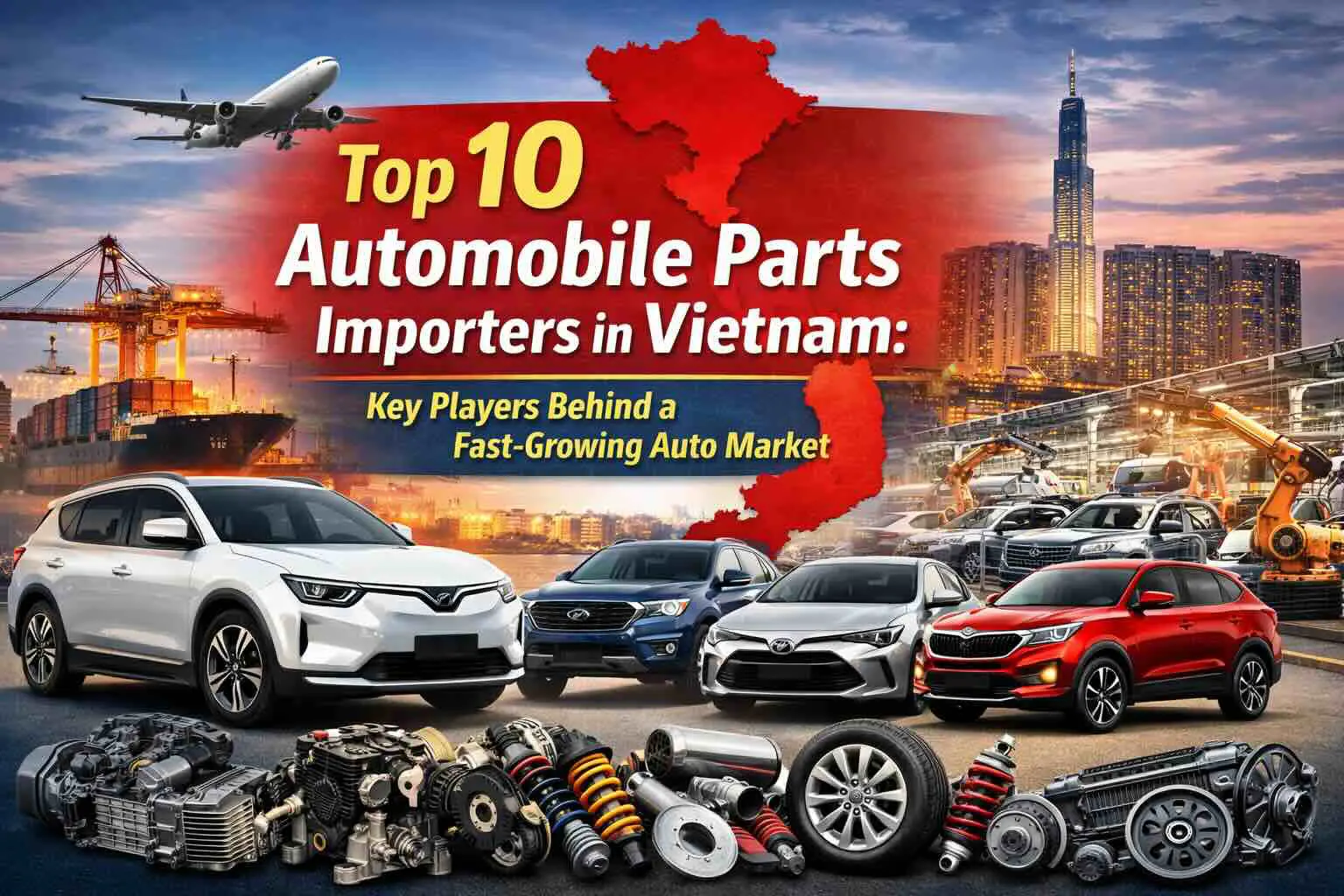
Vietnam’s automotive industry is entering a period of rapid growth. With over 100 million people, rising household incomes, and increasing urbanization, the country is becoming one of Southeast Asia’s most promising car markets. Demand for vehicles is increasing, along with the need for imported automotive parts that support vehicle assembly nationwide.
In January 2026 alone, Vietnam imported over USD 670 million worth of automobile parts, demonstrating strong momentum in vehicle production and sales. These imports offer a clear view of the companies leading Vietnam’s automotive industry. The top ten importers include a mix of domestic manufacturers, international joint ventures, and specialized supply-chain intermediaries that together support the country’s vehicle industry.
Automotive Market Is Expanding Rapidly
Vietnam remains one of Asia’s least motorized countries. Car ownership levels are still far below those of neighboring economies such as Thailand and Malaysia. This gap represents a major growth opportunity for automakers operating in the country.
Vehicle sales have been steadily increasing as the Vietnamese middle class grows. Rising urban mobility needs, better road infrastructure, and increasing consumer purchasing power all support higher demand for automobiles. Meanwhile, government policies promoting cleaner transportation are speeding up the transition to electric vehicles.
However, Vietnam’s automotive manufacturing base still relies heavily on imported components. Localization rates remain relatively low compared with regional manufacturing hubs, implying that each increase in vehicle production generates greater demand for imported parts.
The Top 10 Importers in Vietnam
The following companies were the largest importers of automobile components in Vietnam in early 2026, based on customs import value.
|
Rank |
Company |
Import Value (USD ‘000) |
Segment |
|
1 |
114,043 |
Electric vehicle manufacturer |
|
|
2 |
77,853 |
Trading intermediary |
|
|
3 |
44,233 |
Mazda vehicle assembly |
|
|
4 |
36,548 |
Ford joint venture |
|
|
5 |
33,480 |
Kia vehicle assembly |
|
|
6 |
28,301 |
Hyundai joint venture |
|
|
7 |
19,012 |
Toyota joint venture |
|
|
8 |
15,758 |
Commercial vehicles |
|
|
9 |
14,085 |
Compact EV production |
|
|
10 |
13,997 |
Premium vehicles |
These companies represent the backbone of Vietnam’s automobile production supply chain, covering everything from passenger cars to trucks and luxury vehicles.
VinFast Leads the Market
Vietnam’s largest automobile parts importer is VinFast Manufacturing & Trading JSC, the country’s flagship electric vehicle manufacturer. The company accounts for the largest share of imported components, reflecting its rapid expansion and ambitious production targets.
VinFast has built one of the most comprehensive electric vehicle ecosystems in Southeast Asia, combining vehicle production with charging infrastructure and electric mobility services. Its compact EV models, designed for urban transportation, have been particularly successful in the domestic market.
A second VinFast production facility in Ha Tinh Province also appears among the top importers. This plant focuses on high-volume compact electric vehicles that are becoming increasingly popular among Vietnamese consumers.
The Role of Supply-Chain Intermediaries
One notable name in the ranking is Newtimes Industrial Commercial & Import-Export Services JSC, which ranks second despite not manufacturing vehicles.
The company operates as a specialized trading intermediary that imports automotive components and supplies them to assembly plants, repair networks, and distributors across Vietnam. In a market where hundreds of automotive businesses require access to global component suppliers, these intermediaries play an essential role in maintaining supply chain efficiency.
As Vietnam’s automotive market continues to expand, companies like Newtimes are expected to remain important logistics partners for the broader industry.
THACO: A Dominant Domestic Automotive Group
The THACO Group (Truong Hai Auto Corporation) appears multiple times in the top ten list, reflecting its central role in Vietnam’s automotive manufacturing sector.
THACO operates a massive industrial complex in Chu Lai, where it assembles vehicles for several international brands including Mazda, Kia, Peugeot, BMW, and MINI. In addition, the company manufactures commercial trucks and buses under its own brands.
THACO’s subsidiaries in the ranking include:
- THACO-Mazda Automobile Manufacturing
- THACO-KIA Motors
- THACO Truck Manufacturing and Assembly
- THACO Limousine Passenger Car Manufacturing
Together, these operations represent one of the largest integrated automotive manufacturing ecosystems in Vietnam.
Beyond assembling vehicles for foreign brands, THACO is gradually expanding its own manufacturing capabilities and exploring the development of independent vehicle models in the future.
Global Automakers Maintain Strong Presence
Several international automotive brands remain key players in Vietnam’s vehicle production sector.
Ford Vietnam has been operating in the country since the mid-1990s and has built a strong reputation in the pickup and commercial vehicle segments. Its Ranger pickup truck continues to dominate the Vietnamese market, driving strong demand for imported components used in local assembly.
Hyundai Thanh Cong Vietnam, a joint venture between Hyundai Motor and Thanh Cong Group, operates one of the country’s largest automobile assembly plants. The company produces a wide range of vehicles targeting both entry-level and premium segments.
Toyota Motor Vietnam remains one of the most established automobile manufacturers in the country. The company’s long-standing presence and strong dealer network have helped maintain Toyota’s reputation for reliability among Vietnamese consumers.
Key Risks Facing the Industry
Although Vietnam’s automotive sector is growing rapidly, companies operating in the industry face several challenges.
One major risk arises from the growing presence of Chinese electric vehicle manufacturers, which are entering the Vietnamese market with competitive prices and advanced technology.
Another challenge is Vietnam’s relatively low local parts production capacity, which keeps manufacturers heavily dependent on imported components.
In addition, the shift toward electric vehicles will require significant investments in charging infrastructure and supply chains for batteries and electronic components.
Outlook for Vietnam’s Automotive Industry
Despite these challenges, Vietnam’s automotive market has strong long-term growth potential. Rising incomes, urban expansion, and government support for clean transportation are expected to drive vehicle demand over the coming decade.
Domestic manufacturers such as VinFast and THACO are expanding production capacity, while international companies continue to strengthen their presence through joint ventures and local assembly operations.
As Vietnam’s vehicle market grows and gradually transitions toward electrification, the companies importing automotive components today will play a critical role in shaping the country’s future mobility landscape.